

The fastest way to complicate a Dubai trading setup is to choose a licence before defining what you intend to sell. If you’re researching how to get a general trading license in Dubai, start by matching your planned goods to the licence scope, then choose the jurisdiction that fits your customers and operating model.
Mainland and free zone setups have different requirements, and some goods may need additional approvals. Clarifying your product range, intended customers and goods flow before applying helps you prepare a focused application and spot questions that need attention.
This 2026 step-by-step guide explains how to define your trading activities, compare Dubai mainland and free zone routes, and organise your application. It also covers the administrative steps to plan for once the licence is issued. ConnectIn supports mainland and free zone company formation and licensing in Dubai, with related corporate and administrative services.
Key Takeaways
- A general trading licence covers an approved business scope, not automatically every type of product. Define the goods you plan to trade before settling on licence activities.
- To understand how to get a general trading license in Dubai, follow a clear sequence: map your goods, select a jurisdiction and activities, prepare documents, then submit and follow up.
- Compare mainland and free zone routes against your intended customers, operating location and goods flow. The right fit depends on your business model.
- Use a pre-submission checklist to organise shareholder details and supporting documents, while accounting for authority-specific requirements and possible goods approvals.
- ConnectIn supports mainland and free zone company formation and licensing in Dubai, as well as related corporate and administrative procedures.
What Does a General Trading License in Dubai Allow?
A general trading licence authorises a company to conduct approved trading activities across a broad range of goods, subject to the activity wording and any applicable product-specific requirements. It can offer broader scope than a licence limited to one defined product line, but it does not automatically approve every item a business might want to buy or sell.
Dubai’s diverse commercial environment includes activity across multiple sectors, as reflected in the Economy of Dubai. But a company’s permitted trading scope still depends on its approved licence and the goods involved. For anyone considering how to get a general trading license in Dubai, the first practical task is to describe the intended products clearly enough to assess the relevant activity and any additional requirements.
Which goods can a Dubai general trading licence cover?
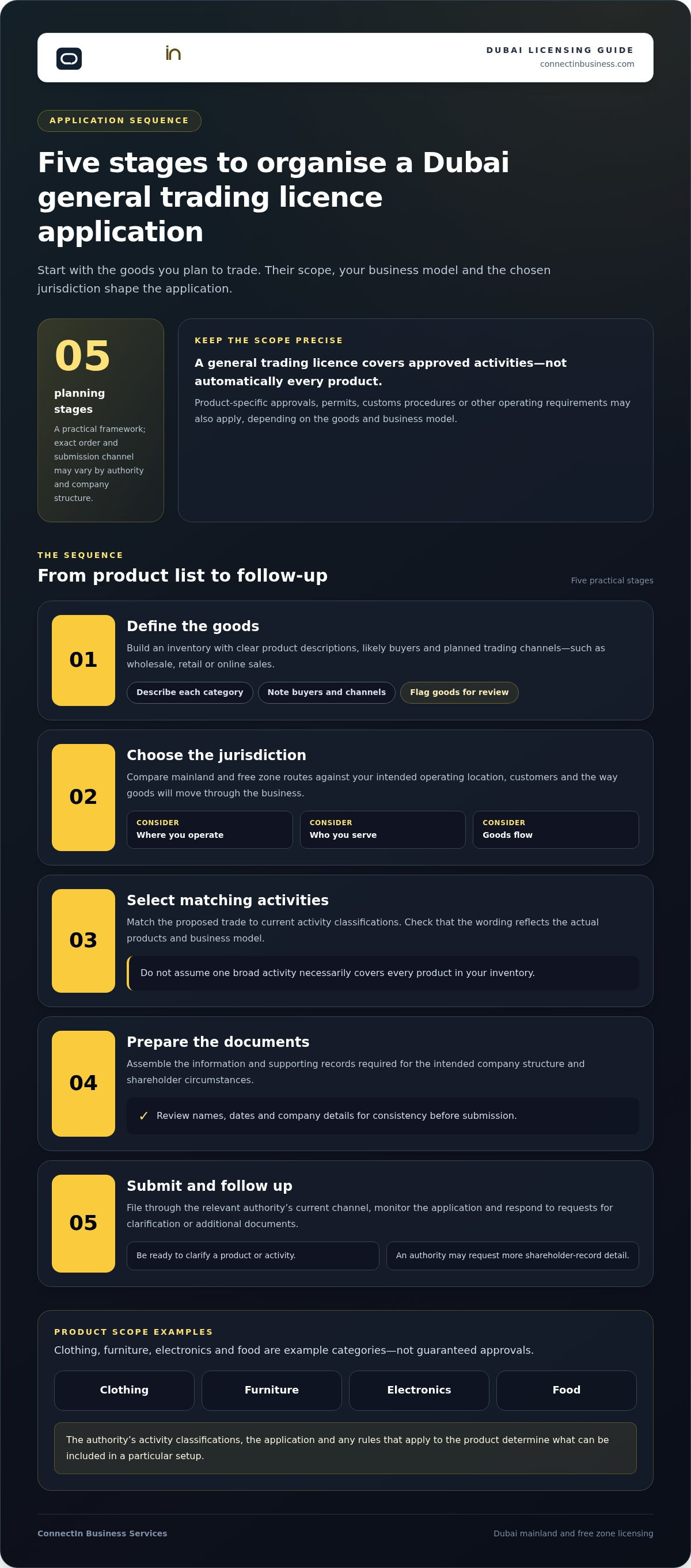
Clothing, furniture, electronics and food are examples of product categories a general trading activity may be intended to cover. They are not a guaranteed list of approved goods. The authority’s activity classifications, the company’s application and any rules applying to a product determine what can be included in a particular setup.
Be precise about the goods. “Electronics” may be too broad for planning purposes. Naming the specific devices and explaining how the company will trade them gives the licensing authority a clearer basis for reviewing the proposed scope. A business trading only in furniture also has a different product profile from one planning to trade furniture, packaged foods and electronic devices. A broader portfolio may call for more detailed classification and review.
Before finalising the scope, identify products that could be subject to sector-specific controls or approvals. Requirements depend on the goods and relevant authorities, so don’t treat a category as cleared simply because it fits a broad trading description. Clarify these points before committing to activity wording or building an operating plan around the proposed products.
What a general trading licence does not automatically permit
A licence activity and permission to handle a particular product are separate considerations. Depending on the goods and business model, additional approvals, product permits, customs procedures or other operating requirements may apply. Their relevance can depend on what is traded, where it is sourced and how it is brought to market. Include these factors in scope planning rather than assuming the licence resolves them.
A general trading licence authorises the approved trading activity; it is not blanket product approval. This distinction helps prevent a common planning error: assuming a broad licence description confirms that every proposed item can be imported, stored, marketed or sold under the same conditions. Identify applicable requirements for regulated or potentially restricted categories before proceeding.
Keep a working product list that names each intended category and describes the goods clearly. Separate routine items from products that may need further review, and note how each will be traded. This creates a defined commercial purpose for the application and a practical way to assess whether the proposed licence scope matches the business you intend to operate.
How to Get a General Trading License in Dubai: The Application Sequence
A well-prepared application starts with business decisions, not a form. Before submitting, define the goods you intend to trade, choose the jurisdiction that fits your operating model, and identify the activities that accurately describe the business. These decisions shape the application and the supporting information you’ll need.
The sequence below is a practical framework for how to get a general trading license in Dubai. The exact order and submission channel can vary by licensing authority and company structure, so use it as a planning guide rather than a universal filing procedure.
- Define the goods. Prepare an inventory of intended products. For each category, record a clear description, likely buyers and planned trading channels, such as wholesale, retail or online sales. Flag products that may need a separate authority review.
- Choose the jurisdiction. Compare mainland and free zone options against where you plan to operate, who you intend to serve and how goods will move through the business. This choice can influence the authority, application route and administrative requirements.
- Select the activities. Match the proposed trade to current activity classifications. Check that the selected wording reflects the actual goods and business model. Don’t assume one broad activity necessarily covers every product category in your inventory.
- Prepare documents. Assemble the information and supporting records required for the intended company structure and shareholder circumstances. Review names, dates and company details for consistency before submission.
- Submit and follow up. File through the relevant authority’s current channel. Monitor the application and respond to requests for clarification or additional documents. An authority may need more detail about a product, activity or shareholder record before proceeding.
Define the goods and select matching business activities
Make the inventory specific enough to support classification. Instead of writing “consumer goods,” identify the product categories and describe them in plain, accurate terms. Add the intended buyers and sales channels to show how each category fits the business. Then compare the list with current activity classifications and mark any exact classifications that need verification. This preparation helps expose gaps before they become application queries.
Prepare the company application and supporting documents
Common document categories may include identity records for individual shareholders and company information for corporate shareholders. This is not a fixed checklist: the authority, legal structure and shareholder circumstances determine what is required. Confirm the current requirements for your chosen route before filing. If documents need certified translation or attestation for that authority, arrange the relevant formalities during preparation rather than assuming they apply in every case.
Keep a record of the goods inventory and activity descriptions used in the application. If the authority requests clarification, consistent information makes it easier to respond accurately. ConnectIn supports mainland and free zone company formation and licensing, and can help organise the route and application steps around your proposed business model through its company formation and licensing support.
Dubai Mainland or Free Zone: Which Route Fits General Trading?
Neither route is automatically better for a general trading business. The right choice depends on where the company intends to operate, who it plans to serve, how goods will move through the business, and which activity and setup requirements apply. Compare those factors with your actual operating plan, not a general assumption about what a mainland or free zone licence allows.
Mainland or free zone is a business-model decision: weigh intended customers, operating location, goods flow and the relevant authority’s requirements before choosing. The comparison below is a starting point. Current requirements can differ by activity, authority, company structure and, for free zones, the specific zone.
| Decision factor | Mainland route to assess | Free zone route to assess |
|---|---|---|
| Intended customers | Consider whether the plan depends on operating directly in Dubai’s or the wider UAE market, and establish what the approved activity permits. | Consider the intended customer geography and whether the zone’s activity scope and operating conditions suit the planned sales model. |
| Operating location | Assess where the business will be based and what premises or other requirements apply to the selected activity. | Compare the zone’s available facilities and location with the company’s staffing, storage and day-to-day needs. |
| Goods flow | Map how goods will be sourced, stored, supplied and sold, then identify any related requirements that apply to that model. | Map the same journey against the chosen zone’s operating arrangements and any applicable requirements for the intended trade. |
| Authority requirements | Review current activity classifications, application steps, premises conditions and any approvals relevant to the goods. | Review the specific zone’s eligible activities, facilities, application process and any product-related approvals. |
When to assess a Dubai mainland setup
A mainland setup is worth assessing if the planned business model centres on operations in Dubai’s local market. Start with the intended customers and sales arrangements, then consider whether the selected activity, premises and any product approvals align with them. Requirements depend on current rules and the particular activity, so don’t assume a general trading description settles every operational question. The route should fit the company’s actual trading plan.
When to assess a Dubai free-zone setup
A free zone may be relevant where its location, operating model and customer geography fit the business’s plans. Compare zones on their permitted activities, facilities and application processes rather than treating them as interchangeable. A zone’s terms can shape how the company is established and operates, so assess the specific option against the planned goods flow and intended customers.
To decide, write down where customers are based, where the company will operate and how products are expected to move from supplier to buyer. Then compare that outline with the current requirements of the relevant mainland authority or individual free zone. This is more useful than selecting a route based on a single perceived advantage.
For applicants researching how to get a general trading license in Dubai, jurisdiction selection should follow the goods and operating plan. Once the proposed route is clear, compare its current activity scope and application requirements with the company’s specific circumstances.
Documents, Approvals, and Common Delays to Plan for
A complete application is easier to assess when company details, proposed activities and supporting documents are consistent. Requirements vary by licensing authority, jurisdiction, legal structure and shareholder circumstances, so use the checklist below as a planning tool, not a universal document list. Confirm the current requirements for the chosen route before submission.
Build a case-specific document checklist
Organise information into clear categories. This makes missing details easier to spot and helps keep the application aligned with the proposed trading scope. Depending on the case and authority, relevant items may include:
- Shareholder identity details and supporting records.
- Company information, including records relevant to any corporate shareholder.
- Proposed company name, legal structure and business activity details.
- A product inventory with clear descriptions that match the intended trading scope.
- Any other forms or supporting records specified for the chosen application route.
Check required formats, document validity and submission method against the relevant authority’s current instructions. Translation or attestation may be needed in some cases, but don’t assume either applies to every document or setup. Where formalisation is required, arrange the relevant document services in line with the authority’s instructions.
Consistency matters. Compare shareholder names, company details and product descriptions across forms and supporting records. If one document uses a different name format or the goods are described broadly in one place and narrowly in another, the authority may request clarification. A final cross-check can catch these gaps before filing.
Check goods-related approvals and post-licence needs
Separate the licence application from the permissions and procedures that may apply to particular goods or trading arrangements. A trade licence application concerns the company’s approved activity and formation; it does not, by itself, settle every product-compliance or import and export question. Identify potentially regulated goods early, then establish which relevant authority requirements apply before trading.
Customs procedures and product-related approvals are also distinct from the core company application. Their relevance depends on the goods and how the business plans to source, move and sell them. Verify applicable import, export and customs procedures with the relevant authorities. Track these follow-up items separately so they are not mistaken for documents every applicant must submit with a licence application.
Incomplete information, unclear goods descriptions and unresolved approval questions can lead to follow-up requests. The authority may ask for clarification or additional documents, and timing depends on its review and the circumstances of the application. There is no single processing period for every case. A precise, consistent file gives reviewers a clearer picture of the proposed business and helps you respond efficiently if questions arise.
If you’re planning how to get a general trading license in Dubai, prepare the document checklist alongside the goods and activity details, then track authority-specific and post-licence requirements separately. Arrange support with your Dubai licensing application through ConnectIn’s mainland and free zone company formation and licensing services.
Getting Your Dubai General Trading Licence with ConnectIn
Once the product scope, jurisdiction and document requirements are mapped out, bring them together in a practical setup plan. ConnectIn Business Services supports mainland and free zone company formation and licensing in Dubai, helping align the proposed route and licensing process with the company’s activities and operating model.
How ConnectIn supports company formation and licensing
A trading setup needs more than a selected licence route. The activity scope, company structure and application administration should work together. ConnectIn supports both mainland and free zone formation, with guidance shaped around the business’s proposed activities and operating plans. This helps applicants organise the setup process and address administrative requirements in a structured way.
Related services can support the wider process where they fit the company’s circumstances. A trade licence amendment may be relevant if an established business needs to update its licensed activities. ConnectIn’s PRO services support relevant UAE administrative procedures, while certified legal translation or document attestation can help when the authority’s requirements call for formalised documents. The appropriate steps depend on the application and applicable authority requirements.
Company formation and licensing support can help organise the application process, while the relevant authority reviews the application and determines its outcome. Requirements may vary according to the chosen route, company structure and proposed goods. A clear setup plan keeps these considerations visible without assuming every business follows the same process.
Prepare for a focused setup discussion
Before planning the next stage, bring together the information that will define the proposed business. A concise preparation file can include:
- Product categories and clear descriptions of the intended goods.
- Target markets and the customers the company expects to serve.
- Shareholder details and information about the proposed company structure.
- The planned operating model, including where the business will be based and how it expects to trade.
- Known document, translation, attestation or product-approval considerations that may affect the application.
This overview gives the setup discussion a practical starting point. It connects the goods scope to the intended activities, helps compare mainland and free zone routes against the business model, and highlights application documents or administrative steps that need attention. PRO support can also form part of the wider setup plan where relevant.
For readers assessing how to get a general trading license in Dubai, the immediate priorities are clear: define the goods, compare the routes, organise the supporting information and plan the submission around the relevant authority’s requirements. Discuss your Dubai business setup with ConnectIn.
Move from planning to a clear setup decision
Turn your trading plan into a defined setup brief. Clarify what the business will trade, where it expects to operate and what information is ready for an application. A focused brief makes it easier to discuss the right route and licensing arrangements.
If you’re working out how to get a general trading license in Dubai, ConnectIn can support setup planning and related corporate procedures, including licence amendments, PRO assistance, certified legal translation and document attestation where relevant.
Bring your proposed product categories, target markets, shareholder details and operating plans together as a starting point. ConnectIn can help you consider the formation route and organise the licensing process around your business objectives, while the relevant authorities determine their requirements and decisions.
Discuss your Dubai business setup with ConnectIn to plan your next step. With the right preparation, you can move forward with a clearer plan.
Frequently Asked Questions
Can a general trading licence cover every type of product?
No. The licence’s approved activities and any product-specific requirements both affect what the company may trade. For example, a business planning to sell food products should identify the precise goods rather than relying on a broad “general trading” label. Prepare a product list before applying, then establish the relevant activity classification and any additional permissions with the appropriate Dubai or UAE authority.
Can I sell online with a Dubai general trading licence?
Online sales may be possible if the company’s approved activities and operating model cover the intended trade. For example, a business selling goods through its own website should consider whether the planned products and sales channel align with its licensed activities. Requirements can vary with the goods and authority. Establish the applicable scope before launching, and account for any separate product obligations that may apply.
Do I need a separate approval to import goods into Dubai?
It depends on the goods and the applicable import, customs or regulatory procedures. A company licence alone doesn’t establish that every shipment or product meets all requirements. For example, a product category subject to additional controls may involve permissions or documents beyond the company’s trade licence. Identify what you intend to import, then establish the current procedures with the relevant Dubai and UAE authorities before arranging a shipment.
Can a foreign investor apply for a general trading licence in Dubai?
Yes, foreign entrepreneurs can explore company formation in Dubai through mainland and free zone routes. The structure and conditions for a particular application depend on the selected authority and proposed activity, so avoid basing a plan on a blanket ownership claim. To understand how to get a general trading license in Dubai as a foreign investor, first define the business model, then establish the applicable rules for that setup.
Can a general trading licence include more than one business activity?
It may be possible, but the permitted combination depends on the licence type and current rules of the relevant authority. A company planning to trade several product categories should list each one and any related activities, rather than assuming they all fit automatically. The licensing authority assesses the proposed combination for the chosen route, so avoid relying on older online claims about fixed activity limits.
What should I do after receiving a Dubai general trading licence?
Review the issued licence carefully and compare its company details and activities with the approved application. Before trading, map any separate product permissions, customs procedures or operational requirements that apply to your business. Keep the licence and supporting records organised, and add renewal and amendment dates to an internal calendar. If the business changes its activities, assess whether a licence amendment or further authority review is needed.


